Measurement
Incoming solids and optical/organic measurements appropriate to the primary-treatment duty.

Chemically enhanced pre-treatment. Feed-forward coagulant dosing ahead of primary clarification, developed around the plant’s treatment and downstream loading objectives.
Wastewater
Feed-forward coagulant dosing ahead of primary clarification, developed around the plant’s treatment and downstream loading objectives.
Software shaped around your process
The value is in the relationship between the measurements, the model and your treatment objective.
Explore the technologyBring together the online water-quality and process measurements agreed for the treatment duty. PMA reviews their location, units and history for the site.
A relationship developed from process evidence translates changes in incoming water into a predicted coagulant demand. The treatment objective shapes the model.
The calculated dose feeds the agreed plant control arrangement. Control limits, the existing dosing approach and operator responsibilities are reviewed before handover.
Compass data / illustrative interface
A visual example of how changing incoming conditions and a calculated dose can be read together. These are fictional demonstration values, not site readings or treatment results.
Illustrative UI only. Values and curves are fictional, carry no performance meaning, and require site-specific units and validation before operational use.
The data behind the model
Incoming solids and optical/organic measurements appropriate to the primary-treatment duty.
Coagulant-dose prediction ahead of primary clarification.
The control objective is defined around primary-effluent quality or the agreed downstream loading requirement.
Review the measurements, objective and evidence for this application.
From application to control
Define the treatment objective, source variability and current dosing approach.
Bring together online measurements, operating records and laboratory evidence.
Agree the instrumentation generation, measurement arrangement and plant interface.
Establish a site-specific assessment and review the model before the agreed control handover.
Application questions
CEP addresses chemically enhanced pre-treatment ahead of primary clarification. CPR addresses the chemical phosphorus-removal duty. The treatment objective determines which model should be reviewed.
Provide the incoming wastewater characteristics, primary-treatment arrangement, downstream objective, current chemical dosing and available measurements.
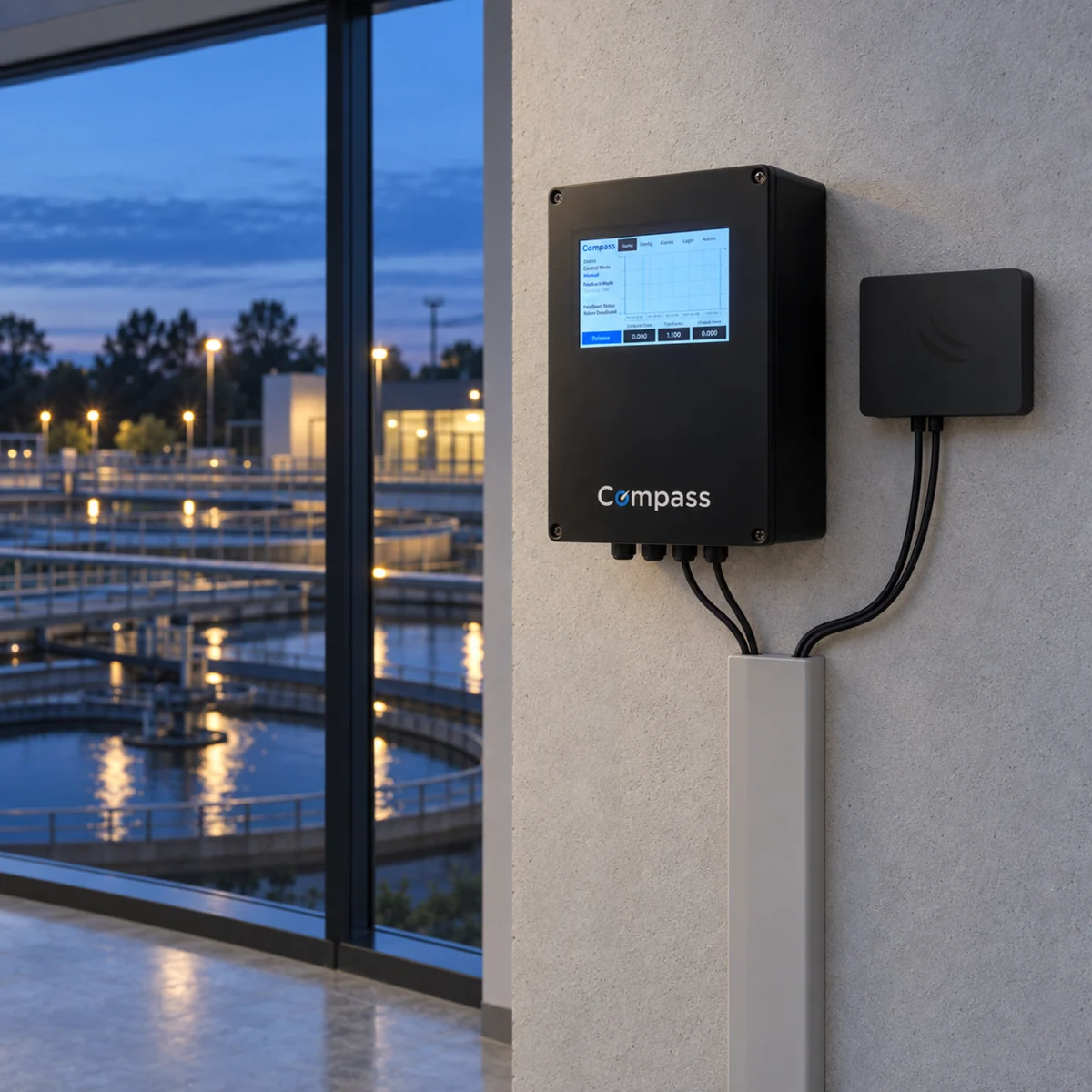
The dose prediction is developed from site-specific measurements and process evidence. Review the treatment objective, available instrumentation and control arrangement with PMA.
Technical information
Explore the range brochure, or ask PMA for current Compass CEP instrumentation and configuration details for your site.
A clearer starting point
Feed-forward control uses measurements of incoming water quality to calculate a dose before changes pass through treatment. A site-specific algorithm relates those measurements to coagulant demand.
Compass and Compass EOR cover drinking-water duties. Compass CPR and Compass CEP cover distinct wastewater duties. PMA can review your treatment objective, existing process and available measurements.
The instrumentation and integration depend on the system generation and the site. A configuration review establishes the sensors, control signals, communications and installation arrangement for your project.
Share the instruments, signals and control arrangement already available at your site. Compatibility and the measurements required for your application need to be reviewed for the proposed configuration.